GuidesGowning
Cleanroom gowning: what to wear and in what order
People shed more particles than anything else in a cleanroom. The gown keeps skin, hair and fibres in. The cleaner the class, the more of the body it covers.
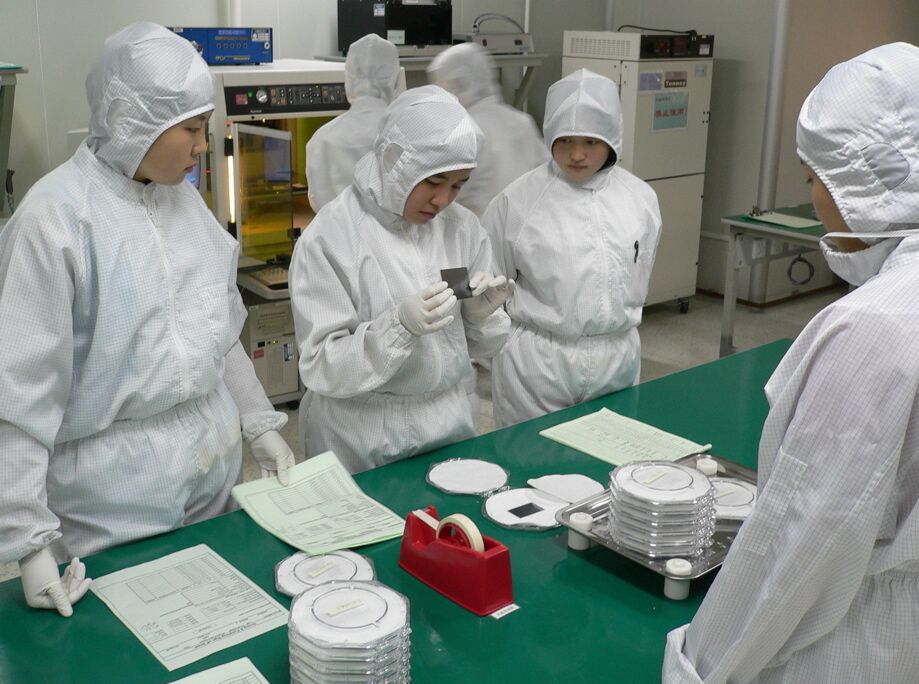
What to wear, by class
| Room | Typical gown |
|---|---|
| ISO 8 | Hair cover, smock, shoe covers. Gloves when the process needs them. |
| ISO 7 | Hair cover, beard cover or face mask, smock or coverall, shoe covers or cleanroom shoes, gloves. |
| ISO 5 to 6 | Hood, face mask, coverall, boots, gloves. |
| GMP Grade A and B | Sterile hood, mask, goggles, coverall and boots; sterile gloves, often two pairs. |
Typical sets. ISO 14644-5 asks for a gowning procedure; your own SOP decides the garments.
The gowning order
- Remove jewellery and watches. Wash and dry your hands.
- Step onto the tacky mat at the door.
- Hair cover first, then beard cover or face mask.
- Hood, for ISO 6 and cleaner.
- Smock or coverall. Keep it off the floor as you put it on.
- Cross the bench: one shoe cover or boot on, that foot over to the clean side, then the other.
- Gloves last, pulled over the sleeve cuffs.
- Check yourself in the mirror: no hair, skin or own clothes showing.
Take it off in reverse order. Reusable garments go in the laundry bag, disposables in the bin.
ESD smocks
An ESD smock has carbon threads in a grid or stripes. Grounded through the wearer or a cuff cord, it drains static before a spark can reach a chip. Semiconductor and electronics plants in Penang and Kulim need it.
Not every ESD smock is made for a cleanroom. For one that is, check three things: low-shedding polyester, bound seams, and test results for the ESD and particle levels.
Shoes and gloves
- Shoes. Washable, low-shedding, ESD soles for electronics. They stay inside the cleanroom.
- Gloves. Nitrile is the usual choice: fewer particles and ions than latex, and no latex allergy. Buy gloves packed in a cleanroom and rated for your class.
Laundry
Reusable gowns go to a cleanroom laundry: washed in filtered water, dried and folded in a cleanroom, sealed in bags. Ask the laundry for particle test results per batch and a limit on how many washes a garment takes. IEST-RP-CC003 is the usual reference.
Questions
Smock or coverall?
A knee-length smock is usual for ISO 7 and ISO 8. ISO 6 and cleaner need a coverall, which covers the legs and closes at neck, wrists and ankles.
What is an ESD smock?
A smock with carbon threads woven through it. Connected to ground, it drains static before it can damage a chip. Electronics plants need one under IEC 61340-5-1 or ANSI/ESD S20.20.
Are cleanroom shoes needed?
Shoe covers are enough for many ISO 8 rooms. Staff who work in a room every day usually get cleanroom shoes: washable, low-shedding, with ESD soles in electronics plants, and never worn outside.
How often are cleanroom garments changed?
Your SOP sets it. Disposables go after each exit. Reusable garments are changed on a set cycle, daily to weekly in ISO 7 and ISO 8, and at every entry in GMP Grade A and B.